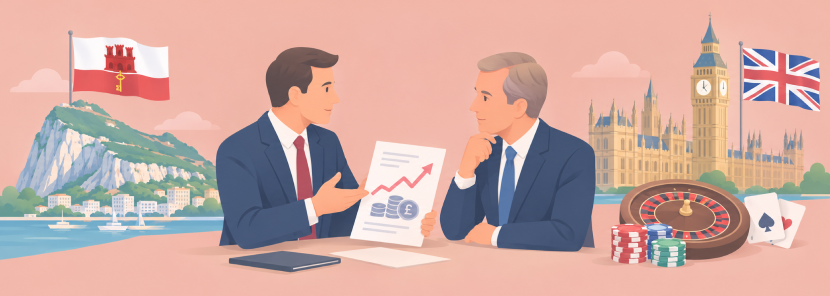

Gibraltar’s Trade and Industry Minister Nigel Feetham has met Reform UK leader Nigel Farage and senior party MPs to discuss the proposed increases in UK gambling taxes ahead of this week’s Budget.
Feetham is trying to convince politicians that additional tax increases could damage Gibraltar-licensed casinos and the industry as a whole. A hike could ultimately threaten jobs and reduce tax revenues for the British Overseas Territory, which hosts offices for several major UK betting and gaming operators.
In the past, the minister campaigned against changes to the UK’s gambling tax rates. Still, the UK increased the remote gaming duty last year. With the government’s upcoming Budget, he is again stepping up efforts to ensure policymakers understand the potential impacts of further tax rises.
“With the UK Budget approaching, I have been making the case across the political spectrum to ensure that the potential consequences of further gambling tax increases for Gibraltar are fully understood,” Feetham said.
Reform UK Raises Concerns over Gambling Taxes
During this week’s meetings with Gibraltar, Reform UK had the most significant representation, as Feetham met Farage alongside MPs Robert Jenrick and Andrew Rosindell. The discussions focused on the potential effects of further gambling tax increases on Gibraltar’s gaming sector and the wider economy.
Rumours before the finalisation of the Budget imply that the Machine Games Duty could be increased to 40%, which prompted concerns about the future viability of parts of the gambling industry. Expectations have since moderated, with a more limited increase of 5%, taking the duty to 25%, now considered a possibility.
In the past, Farage voiced his support for the gambling industry, specifically its contribution to the UK high streets. Before the November 2025 Budget, the Reform leader argued that betting shops continued to provide a social setting for some customers.
“What I would say about the high street is that one of the things that does still survive is the bookmaker shop, which actually, for a lot of lonely people, is a place they can go in and meet people,” said Farage at the time.
Farage has also warned that higher gambling taxes could lead to the decline of British seaside towns and villages. For instance, his Clacton constituency, which is a domestic tourism destination, could be particularly exposed to an increase in MGD due to its reliance on businesses serving visitors.
Industry Finds Support from Political Parties
The lobbying efforts are also coming from other parties, with Labour, Conservative and Reform politicians attending a breakfast meeting with gambling industry stakeholders during Gibraltar Day in London.
Among them were Rosindell, Conservative MP Wendy Morton and Labour MP Gareth Snell. While many Labour MPs have supported further tax increases on gambling operators, Snell has emerged as a more sympathetic voice within the party.
Prior to that, 90 Labour backbenchers signed a letter led by MP Alex Ballinger calling for MGD to be doubled to 40%. Addressing industry representatives at the breakfast, Snell urged the sector to make a stronger public case for its economic contribution.
“I would encourage all of you to use every aspect of your voice and your ability to shout proudly about the benefits of this sector because we should not be shy about the fact that what it produces, the jobs it creates, and the tax it pays,” he said.
The cross-party engagement comes at a time when the gambling industry faces growing pressure over the potential economic consequences of higher taxation, including the impact on employment and investment.
Worried about Job Losses and Failed Tax Revenue Targets
However, there have been concerns over the potential effects of the UK’s gambling tax changes after Flutter announced plans to cut 1,400 jobs across its offices in the UK, Ireland and continental Europe. The company cited the impact of last year’s tax increases as the main reason for the layoffs.
Still, for Gibraltar, employment is a central part of the debate. The territory’s government has warned that operators facing higher UK gambling taxes may seek to offset additional costs through changes to staffing, potentially reducing both employment and local tax receipts.
Feetham has previously told ministers that Gibraltar’s corporate tax and Pay As You Earn (PAYE) revenues depend partially on how gambling companies respond to increased operating costs.
“Raising taxes in the UK imposes higher costs on Gibraltar gaming businesses and reduces the amount ultimately paid in corporate tax in Gibraltar. If part of that mitigation involves reducing jobs, this would, in turn, have a direct impact on PAYE receipts.”
According to Feetham, online betting and gaming currently accounts for approximately 30% of Gibraltar’s gross domestic product. It also contributes almost one-third of the territory’s tax receipts while employing more than 3,400 individuals.
The minister’s campaign reflects concerns that higher gambling taxes could have consequences beyond the UK operators directly liable for them. For Gibraltar, where the sector represents a significant share of economic activity and public revenue, further increases could place pressure on businesses, employment and government finances.
With the Budget approaching, Feetham is seeking to persuade politicians across the political spectrum that the wider economic effects of gambling taxation should be considered alongside the government’s revenue-raising objectives.