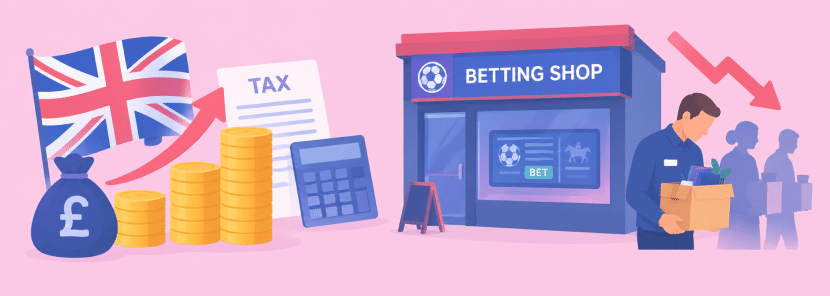

The UK is weighing a drastic increase in gambling tax on high-street slot machines, sparking a lively debate nationwide. The proposal attracted warnings that it could lead to betting shop closures and job losses.
The proposed measure would increase Machine Games Duty from 20% to 40%. Still, the Social Market Foundation believes the hike could bring between £275 million and £460 million in additional tax revenue each year.
It has also attracted support from gambling reform advocates. Still, it has faced strong opposition from leading casino operators, which argue that higher taxes could make parts of the land-based gambling sector unviable.
Fears of Shop Closures
The Betting and Gaming Council, which represents licensed UK casinos, commissioned an analysis from EY examining the potential impact of doubling the tax rate.
The study estimated that as many as 1,470 betting shops could close if the tax rate were increased to 40%. This would represent almost a third of the UK’s 5,617 betting shops and could result in around 15,900 job losses.
EY also estimated that the changes could ultimately result in a net loss of approximately £120 million for the Treasury, as lower gambling activity and employment would compensate for the additional duty.
Betfred owner Fred Done was one of the most vocal opponents of the proposal. He claimed that the tax increase could force him to close around 495 of the company’s shops, put roughly 2,475 jobs at risk and reduce tax contributions by £67 million.
Other major gambling companies have also warned of the potential consequences. Entain, which operates Ladbrokes and Coral, warned Greater Manchester Mayor Andy Burnham that it could be forced to reduce its workforce across its estate of around 2,300 shops.
Meanwhile, Rank Group, the owner of Mecca Bingo and Grosvenor Casinos, says that a third of its venues could potentially close, which could affect around 2,000 employees.
Critics Question Industry Warnings
However, not everyone agrees with the industry’s predictions. Stewart Kenny, co-founder of Paddy Power and a long-standing critic of the gambling industry, has accused operators of scaremongering over the proposed tax increase.
Data also suggests that previous warnings about large-scale shop closures did not fully materialise.
Betfred had around 1,620 shops in 2019 and has since warned that regulatory and tax changes could force the closure of nearly 1,000 locations. Nevertheless, the company’s estate has dropped by around 330 shops during that period.
The broader shift from in-person gambling towards online casinos has also changed the landscape and the state of the sector, making it difficult to establish how many closures were directly caused by regulatory decisions.
Higher Gambling Taxes Already Affect Operators
The concerns from stakeholders also come against the backdrop of previous tax increases.
Bet365, which operates exclusively online, recently announced plans to cut around 300 jobs at its headquarters. The company said it was due to higher gambling duties introduced under former Chancellor Rachel Reeves’ previous Budget and regulatory and tax-related costs.
However, the company’s use of AI and wider cost-cutting efforts have also been highlighted as possible factors behind the redundancies. A spokesperson explained the cuts reflected a highly competitive trading environment, plus increased regulatory and tax-related costs.
Other major operators, including Betfred, Entain and Flutter, have also announced job cuts following the previous increase in gambling duties. While it is difficult to determine how much of the layoffs were caused by taxation, higher operating costs are likely to put additional pressure on gambling brands.
Casinos and Bingo Halls Could Also Be Affected
The potential tax increase could extend beyond traditional betting shops. According to Simon Thomas, a chief executive of London's Hippodrome Casino, uncertainty surrounding the proposed hike was already affecting investment decisions.
Previously, the company obtained planning permission for a £6 million rooftop expansion but has reportedly put the project on hold while the future of machine games duty remains unclear.
Thomas has also warned that raising tax to 40% could result in significant closures across the casino and bingo sectors, potentially affecting around a third of venues in each category.
Therefore, the possibility of a higher tax rate has become an important issue for the wider land-based gambling industry, rather than simply bookmakers.
Could Higher Rates Benefit Adult Gaming Centres?
A potential result from the tax hike could impact adult gaming centres, which are quite common on UK high streets. Burnham has previously expressed concerns about the growth of these 24-hour centres, where large numbers of gaming machines are concentrated in relatively large venues.
The proposed tax increase is partly linked to concerns over the expansion of these businesses. However, AGCs may also be better positioned than traditional betting shops, casinos and bingo halls to absorb higher taxes. They generally operate with different cost structures and regulatory requirements, while their revenues have continued to grow.
These centres increased their takings from £528 million to £613 million last year, despite relatively limited growth in other land-based gambling sectors. One of the operators, Merkur, has already shown confidence in the sector by offering to acquire some of the 132 betting shops Betfred recently put up for sale.
This raises the possibility of unintended effects from higher MGD. Instead of simply reducing the number of gambling venues, the measure could accelerate the decline of traditional betting shops while creating opportunities for AGCs to expand.
Gambling Operators Face Wider Regulatory Changes
The MGD debate comes as land-based gambling operators prepare for separate UK Gambling Commission changes to gaming-machine standards. From 2027, new machines will have to provide players with information such as their net position and time spent playing, while certain game-design features will also be restricted.
The regulator has acknowledged that some changes could create technical and financial costs for businesses, although most requirements will apply to new machines rather than existing machines.
Treasury Faces Difficult Tax Decision
Overall, the discussions over a higher tax rate on machine gaming highlight the challenge facing the government as it considers how to increase gambling tax revenues without damaging the land-based sector.
The Social Market Foundation insists that doubling the rate could generate up to £460 million annually, while research suggests the measure could instead produce a net loss for the Treasury once closures, employment and reduced gambling activity are considered.