
Sweden is looking into reducing unlicensed casino play. Most recently, the Swedish Gambling Authority announced a brand-new strategy to prevent offshore operators from targeting Swedish consumers.
As part of the new measures, the country will now focus on whether a gambling operator is actively targeting local players. Instead, the question will be whether users can use the provided gambling offering.
A Fundamental Legal Shift
The newly proposed participation criteria were presented in the government’s memorandum titled ‘The Scope of the Gambling Act.’ If passed, the changes would result in significant changes to the country’s regulatory model.
Under the new framework, iGaming brands accessible to local players could be considered as doing business within the Swedish jurisdiction. It would be considered regardless of where the company is headquartered or how it promotes its offerings.
Therefore, operators who have not yet acquired a Swedish gaming license must take proactive steps to block Swedish consumers from accessing their products. If they fail to do so, Sweden could resort to taking the issue to court.
Introducing a Three-Layered Approach
In an attempt to curb illegal gambling activities, the Swedish Gambling Authority has suggested a couple of measures for unregulated operators to adopt. They are divided into three main categories: access, financial and registration restrictions, and contractual control.
Blocking Access Early
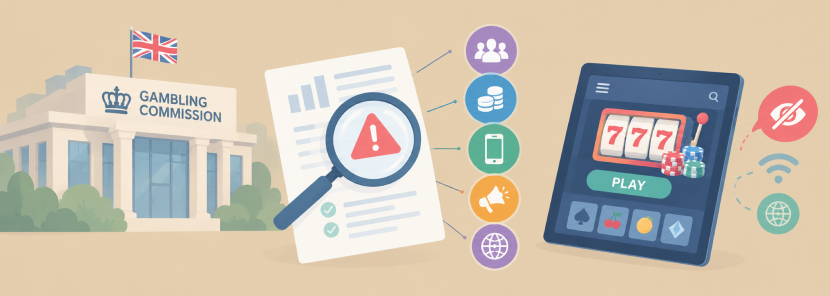
SGA’s report sees this as the most effective measure. The regulator wants to stop users from getting into these gaming sites early. This can be achieved by utilising tools such as geoblocking, which restricts access based on the users’ IP addresses. Other techniques include barriers that refuse entry when the user is physically located in Sweden.
The new measures urge casinos to block access when a user’s location cannot be properly confirmed or when they spot signs that a player is using a VPN to bypass the location restriction. The objective is simple: make these casinos unreachable for Swedish players.
Stopping Registrations and Financial Flows
The report also states that it is important to prevent users from signing up for accounts or transferring money through these gambling platforms. Some of the proposed measures include removing Sweden as an option when creating an account and rejecting registration attempts from Swedish addresses, postcodes, or phone numbers.
Financial controls are also key, the report notes. Operators are urged to block deposits made via Swedish banks, payment service providers, or cards issued in Sweden. Also, withdrawals to local banks and IBANs should be blocked.
These financial barriers are key, as they can make a casino platform unusable, even if access is not fully blocked. The report also mentioned that limiting withdrawals, especially in combination with other restrictions, can strongly discourage Swedish user participation.
Additionally, the regulator explains that even in cases with cryptocurrency deposits, restrictions on withdrawals can still limit the usability for Swedish players.
Reinforcing Rules Through Contracts
The third measure is about legal and contractual efforts. Gambling operators are encouraged to distinctly state in their terms and conditions that users located in Sweden are not permitted to access their services. They should also avoid listing Sweden as an approved territory and ensure that marketing practices do not target Swedish audiences.
However, the regulator warns that contractual measures alone are not satisfactory. Without support from technical and administrative constraints, such terms may have little effect. In other words, simply stating that Swedish users are not allowed is unlikely to meet regulatory expectations if those users can still easily access and use the platform.
A Single Measure is Not Sufficient
A key takeaway from the report is that there is no single measure that guarantees compliance. Instead, effectiveness depends on how different measures are combined and consistently applied across all parts of a gambling service.
“The decisive factor is whether individuals in Sweden actually have the possibility to participate,” the report states.
If users in Sweden can still access a site, register an account, deposit funds, or withdraw winnings, then the watchdog can deduce that the operator is effectively offering gambling services in Sweden, regardless of any formal restrictions.
Switching to Outcome-Focused Stance
Notably, the SGA will opt for a technology-neutral stance in its recommendations. Instead of prescribing specific tools or systems, the report focuses on outcomes, i.e., whether participation from Sweden is successfully blocked by the operator.
Such an approach reflects the rapidly expanding nature of online services and aims to ensure that regulations remain relevant even as new technologies and mechanics continue to emerge.
At the same time, the report recognises that many of the necessary tools, such as geoblocking and payment restrictions, are already utilised within the global gambling industry. Therefore, the challenge lies less in technological capability and more in consistent and comprehensive implementation.
Industry and Market Impact
The proposed changes could have significant consequences for the online casino market. For unlicensed operators, the message is clear: either implement robust measures to exclude Swedish users or risk falling under Swedish regulation.
For licensed operators, the tighter rules may help level the playing field by reducing competition from offshore platforms that do not adhere to Sweden’s regulatory standards.
Consumers, meanwhile, may see a more restricted online gambling environment, with fewer opportunities to access international platforms that operate outside the Swedish licensing system.