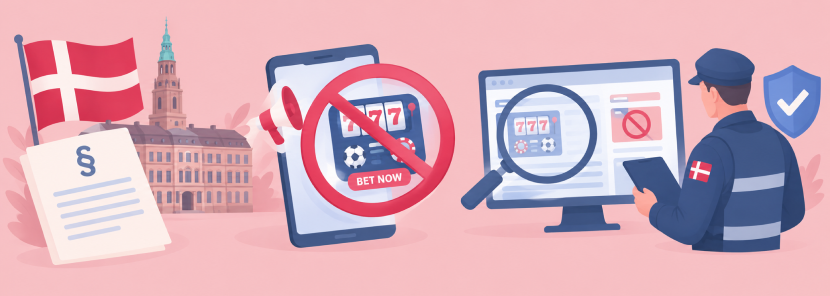




























Norway’s Gambling Authority, Lotteritilsynet, announces that it has blocked 62 gambling operators it believes are offering illegal gambling to Norwegian consumers.
Some of the blocked online gaming platforms include even the widely discussed prediction market platforms Polymarket and Kalshi.
Atle Hamar, director of the gambling regulator, confirmed the planned action to Norwegian media. The companies on the list now have until October 15 to respond before the authority makes its final decisions.
He said that the regulator has essentially reached its conclusion, and explained that companies must receive a notice before Lotteritilsynet can formally decide to block their websites.
Users Cannot Access These Sites
With the DNS blocking measures in place, consumers will not be able to access the affected casino websites through their devices. When they try to open the site, they will see a notice stating that the platform has been blocked, along with an explanation from the Norwegian authority.
Currently, Norway operates a state-controlled online casino market, with state-owned Norsk Tipping holding exclusive rights to most major forms of gambling, including online casino games and sports betting.
Unlike countries with open licensing systems, Norway generally does not allow international operators to obtain standard licences to compete in these markets. Authorities can take action against unregulated operators targeting Norwegian consumers, including blocking their websites and restricting payments.
Norway is also considering expanding its regulated gambling offering. In a proposal submitted for public consultation in September 2026, the Ministry of Culture and Equality suggested granting Norsk Tipping exclusive rights to offer online poker. The proposal aims to channel players towards a regulated alternative to offshore platforms, with the consultation period running until November 29.
62 Companies Face DNS Blocking
According to the Authority, the 62 gambling companies reportedly offered services to Norwegian consumers without the required permits. The list includes operators such as Betway, Bethard, ComeOn, Stake, Cloudbet, Shuffle, Vavada, and others.
Polymarket and Kalshi are also among the most notable brands that are now facing blocking notices. These platforms generated enormous interest worldwide with their prediction market offerings, which allow users to bet on the outcomes of real-life events, such as elections, sports, and more.
The latest action follows previous efforts by Norwegian authorities to restrict access to offshore gambling websites. According to TV 2, so far 238 websites offering gambling have already been blocked in Norway.
Hamar said the blocking policy is part of an ongoing effort to prevent unlicensed international gambling companies from targeting Norwegian consumers.
“This is an ongoing activity for us. We block illegal foreign companies that are aimed at Norway and do not have a licence to operate here,” he said.
Blocking Has an Impact, Says Regulator
DNS blocking can be bypassed using methods such as VPNs or alternative DNS settings, but Hamar noted that the measures remain effective for most consumers.
“If you are willing to make the effort and use enough time and resources, you can get around it. But we know it works,” he said.
According to Hamar, making it more difficult to access gambling websites and process payments can have a significant impact on consumers who are less familiar with methods of bypassing the mentioned geographical restrictions.
He also indicated that further cases could follow, telling E24 that there will “certainly be more cases of this type going forward.”
Polymarket and Kalshi Face Scrutiny
The recent blocks to Polymarket and Kalshi highlight the growing regulatory attention to the rapidly expanding prediction markets. The platforms allow users to place wagers on the outcomes of various real-world events, which has attracted scrutiny from regulators in several jurisdictions.
Hamar argued that prediction markets are increasingly relevant to gambling regulation because their products can be structured similarly to traditional betting markets.
“Prediction markets are on the agenda for all gambling operators in Europe and the US. This is because they offer bets structured as odds. Therefore, we expect companies to comply with Norwegian regulations,” he explained.
For instance, Polymarket has already faced restrictions in several countries, including France, Denmark, Ireland, Italy, Japan and Brazil.
Lotteritilsynet Raises Insider Trading Concerns
Hamar also cited concerns about insider trading when explaining the authority's decision to target prediction market platforms. He claimed that users with access to inside information could have an advantage over ordinary consumers.
“Those who have inside information will always win, while an ordinary consumer in Norway will generally not have access to inside information,” Hamar said.
He described the platforms that can potentially create a perfect system for insider trading and said this was something Norwegian regulators did not want to see.
The comments come amid increased attention around prediction markets and their ability to attract significant sums of money to bets on political and other major events.
Norway’ relatively wealthy and digitally connected population also makes the country an attractive market for gambling operators, according to Hamar. The 62 companies now have until October 15 to submit their responses. Lotteritilsynet is then expected to issue final blocking decisions shortly afterwards.