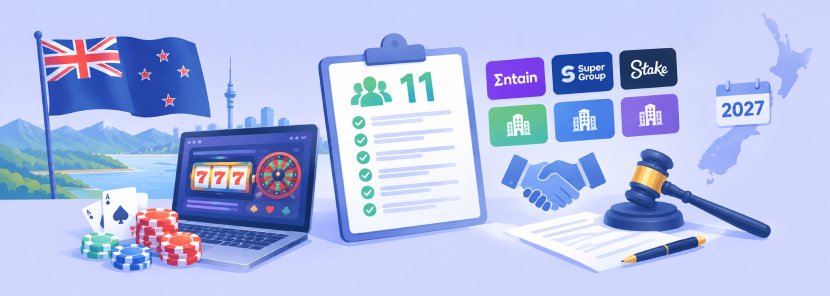















































New Zealand has published detailed legislative guidance on how licensed online casino operators will be allowed to advertise in the country’s new regulated market. The direction introduces some of the most restrictive marketing rules seen in a newly licensed gambling jurisdiction.
The Online Casino Gambling: Advertising and Marketing Legislative Guidance explains how operators must comply with the Advertising and Marketing Regulations. The document is intended to support the launch of New Zealand's licensed online casino regime while ensuring advertising promotes consumer protection and harm minimisation.
Licensed Operators Only
The guidance reiterates that only licensed New Zealand casinos can advertise iGaming offerings in the country. As part of the transition to the regulated market, companies that have secured licences but have not yet completed licensing may face restrictions. However, the Department says it will support providers through the transition.
Operators are made responsible for every advertisement they publish or commission, including campaigns managed by third-party partners. They are expected to maintain compliance systems that cover every stage of an advertisement’s lifecycle, from design and approval to monitoring and prompt removal if problems occur.
The guidance states that the overall objective is to help consumers distinguish regulated operators from unregulated ones while preventing advertising from normalising gambling, and encouraging excessive play or exposing minors to gambling promotions.
Digital Targeting Expected
Advertising will be allowed via several approved channels, but operators will be required to utilise audience-selection tools to minimise exposure among unintended audiences.
The guidance recommends age targeting, geographic restrictions, placement controls and disabling automated audience-expansion features that could widen campaigns beyond their intended audience. Operators advertising with software or apps must also consider whether the user base creates risks under the regulations governing exposure to minors.
Meanwhile, promotion at physical events is allowed only under tightly controlled conditions, with operators expected to implement measures such as age-gating, ticketing systems, restricted-access areas and moderation controls for online events.
The guidance also introduces a broadcast advertising moratorium around live events. For instance, if a live sporting or other qualifying event is broadcast, gambling ads cannot appear from 30 minutes before coverage begins until 30 minutes after it ends, including pre- and post-event programming.
Celebrity Endorsements and Affiliate Marketing Limited
One of the most noteworthy provisions is a ban on personal endorsements.
Gambling operators cannot use real people, fictional characters or AI-generated personalities in ways that would reasonably lead consumers to believe they endorse an online casino. This prohibition extends beyond explicit testimonials and includes formats such as podcast hosts describing gambling products.
The regulations also significantly restrict affiliate marketing.
Advertising contracts where payment depends on a consumer opening an account, depositing money, playing games, reaching loss thresholds or taking similar actions are banned. Still, traditional cost-per-view and cost-per-click advertising may still be permitted provided compensation is not tied to customer conversions.
Advertising Cannot Create Urgency
New Zealand’s new guidance forbids ads that create pressure to gamble or encourage impulsive behaviours.
Platforms are instructed to assess the overall appearance of campaigns, such as wording, imagery, audio and calls to action. For instance, such messaging can include suggestions that consumers will miss out if they do not gamble instantly or that their friends are already participating.
The guidance also bars messages implying that luck, superstition, fate, lucky numbers or similar beliefs can influence gambling results. Ads must not imply that gambling improves a person’s lifestyle or social standing and must comply with New Zealand’s Fair Trading Act by ensuring all claims are accurate and substantiated.
Data Cannot be Used to Encourage Risky Gambling
Another provision that can be found in the guidance is the use of customer data.
Operators may target campaigns using broad demographic information. However, they are prohibited from using individual customer metrics to encourage higher-risk gambling behaviour.
For example, operators must not promote higher-stakes games to customers whose previous gambling history indicates lower staking patterns, or encourage players who usually play card games to switch to online slots based on behaviour patterns.
Restrictions on Gambling Imagery
The regulations also mandate what operators can show in advertisements.
Audio or visual depictions of physical gaming machines and poker chips are prohibited. However, imagery associated with online slot games, such as reels or symbols that do not depict physical machines, can be acceptable if prohibited audio effects are not used.
Also, ads cannot promote slot jackpots, while jackpot advertising for other casino games can be permitted.
Additionally, operators cannot create ads that reference sports betting, novelty betting or other forms of gambling. Casinos operating multiple gambling products under the same corporate brand are expected to ensure their online casino advertising is clearly distinguished from betting or other gambling services.
Transparency Required for Promotional Content
Operators cannot rely solely on branding or logos to make promotional content identifiable. Native advertising, sponsored editorial content, and social media posts must clearly state that they advertise before consumers engage with the material. Disclosures hidden in profile pages, expanded captions or end screens are considered far from enough.
In terms of direct marketing, operators must obtain consent and cannot rely on silence or acceptance of unrelated terms and conditions. Consumers who unsubscribe or otherwise indicate they no longer wish to receive communications must not get any more promotional messages. Self-excluded or operator-excluded customers must also be prevented from receiving direct marketing.
Strict Limits for Bonuses
The guidance also restricts how incentives such as bonuses and free spins can be advertised by online casinos.
For example, any promotional offer must clearly disclose all material terms, restrictions and eligibility conditions. Bonus advertising is generally limited to licensed casinos or direct communications.
Lastly, promotions about account creation, such as free spins for registering, can only be advertised on the operator's own licensed platform.
Protections for Minors
The final section of the guidance is about the protection of young people.
Operators must conduct an overall assessment to ensure promotions neither appeal to nor expose people under 18. Ads cannot be placed where more than 20% of the expected audience consists of minors, like schools, youth events, gaming platforms popular with children, livestreaming and social media with substantial under-18 audiences.
The guidance also bans creative elements likely to appeal to children, including cartoons, mascots, video game characters, youth-oriented humour, music, animation and other styles that are often associated with younger generations.
Finally, operators must ensure advertising is not directed at people under 25 unless audience measures prevent exposure to those under 18, with regulators encouraging the use of age-verification tools and restrictions on automated audience expansion.