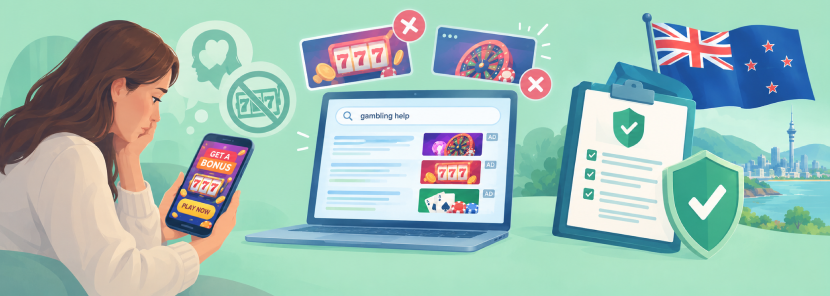

In New Zealand, the Problem Gambling Foundation is looking for stricter enforcement of gambling advertising standards. The group has recently warned that offshore operators continue to target local consumers despite restrictions on promoting their gambling services.
The appeal comes as New Zealand braces for the opening of its regulated market for online casinos in 2027. The calls raise concerns about how the new iGaming regime will regulate and monitor gambling advertising.
Former problem gamblers have reported that advertisements for illegal online casinos continue to appear on their phones, including for people recovering from gambling addiction. Some even shared that they received bonus offers designed to encourage them to resume betting after just a few days away from gambling.
Meanwhile, others claim that they had been exposed to substantial amounts of gambling-related promotion after searching Google for organisations offering help with gambling harm, despite never having accessed a gambling website themselves.
Offshore Operators Accused of Ignoring Advertising Laws
Andree Froude, advocacy director at the Problem Gambling Foundation, said it was quite common for offshore gambling operators to bypass New Zealand’s advertising restrictions through social media, influencers and other promotional methods.
“No, those overseas operators actually have been treating our law as optional for quite some time, and we've seen a lot of breaches of these advertising rules where they have been using social media,” Froude said.
She added that unregulated operators had also used tagging on buildings and walls to promote their illegal gambling websites, and argued that existing restrictions had failed to prevent illegal marketing.
As a result, the foundation is urging the government to introduce stronger controls as the country moves towards a regulated online casino market. Froude insisted that the current framework was confusing because different legislation and advertising standards applied to different gambling products.
Soon online casinos will enter the country’s regulated market, where they will be subject to specific advertising rules once the new licensing system comes into effect. However, the foundation argues that the current restrictions on offshore operators are not being adequately enforced.
Currently, advertising by the TAB and Lotto is governed by a different framework, with Froude explaining that these services face limited or close to none restrictions in some areas, with oversight provided by the Advertising Standards Authority.
Enforcement Key to New Licensing Framework
Just recently, New Zealand’s online casino licensing process marked a significant milestone, as 11 companies successfully bid for the opportunity to apply for the 15 available licences. At the same time, the final auction price reached NZ$15 million per licence.
Some of the most notable names from the licensing process include Baytree Interactive Limited, Christchurch Online NZ Limited, One Casino Limited, Playvia Gaming (NZ) Limited, Rock Swift Group Limited, Rush Entertainment Limited and others. These companies will now advance to the second stage and will be able to apply for a permit.
The new regulatory system will establish requirements for the operators allowed to provide their online gambling product in the country. However, Froude warned that tougher penalties would have little impact unless authorities had sufficient resources to identify breaches and take action.
She added that the Department of Internal Affairs, which currently oversees gambling regulation, needs better funding and resources. This would allow it to better monitor operators and ensure compliance with New Zealand law.
Froude also argued that authorities should also consider operators’ previous conduct during the licensing process. She believes companies that breach advertising restrictions should face penalties from the outset, rather than being allowed to continue operating without meaningful consequences.
“If we don't enforce it, we've got to make sure that the DIA is resourced to be able to keep an eye on what's going on with these operators to make sure that they're complying with our laws.’’
Froude added that breaches should be taken to court when necessary, and stressed that the effectiveness of the regulatory framework would ultimately depend on enforcement.
Foundation Calls for Gambling Advertising Ban
Besides stricter enforcement, the Problem Gambling Foundation also wants to see a broader ban on gambling advertising, as it can help reduce gambling-related harm.
Froude argued that advertising is still an effective way for companies to attract and retain customers, which essentially makes restrictions necessary if New Zealand wants to limit the potential public health consequences of gambling.
She also cited the World Health Organisation, which has identified restrictions on gambling advertising as an essential first step for governments that seek to reduce gambling-related issues.
The foundation’s concerns come as New Zealand prepares to establish a regulated online casino sector, with the licensing system expected to bring additional operators into the market.
Meanwhile, Entain, which operates TAB and Betcha in New Zealand, said in a statement that customers should be aware of the support available to help them keep betting safe and enjoyable.
The company said it operated under strict rules, invested significantly in safer gambling tools and age controls, and was committed to ensuring betting remained responsible while delivering benefits to the community.