











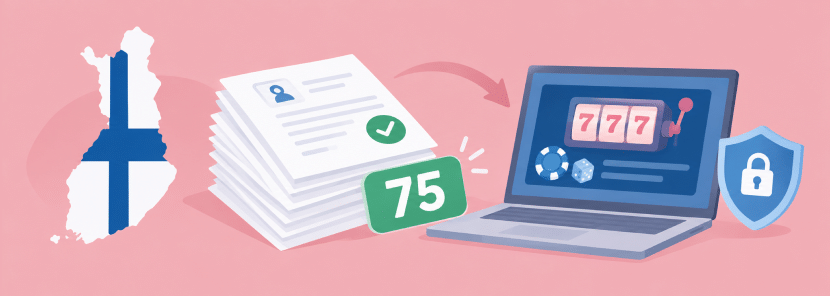

Finland’s highly anticipated opening of its online gambling market has attracted significant industry interest. According to the National Police Board, there have already been 75 licence applications from third-party companies.
As of September 22, 2026, the authority had received 75 submissions, which is up from the 50 reported in June 2026. No licences have been granted yet, as applications are expected to take six to eight months to process.
Gambling operators who wish to join the legal market can submit their applications from March 1, 2026, while Finland braces to move away from Veikkaus’ gambling monopoly.
Operators submitting gambling licence applications in 2026 are required to pay a €29,000 processing fee. There is no deadline for submitting applications, while Finnish law does not limit the number of online casinos that can receive licences.
Interest Exceeds Expectations
It’s safe to conclude that the number of applications has exceeded initial expectations.
Janne Nikkinen, a university researcher at the University of Helsinki, said that previous estimates had put the likely number of applications in the 40 to 60 range, which was also seen as an optimistic prediction at the time.
“Finland is attracting interest. After all, this is a billion-dollar pot that is being distributed here now,” Nikkinen said.
He also compared Finland’s application interest with Sweden’s, where there are currently 89 active gambling licences. For contrast, Sweden has approximately twice Finland’s population.
However, the 75 applications do not necessarily mean 75 separate companies. Operators can submit separate applications for different gambling activities, but a single application can cover several forms of operation.
Nikkinen assumes most applications likely come from different companies, while noting that he had not seen the applications and could therefore not confirm this.
Unibet Seeks Another Finland Entry
It’s worth noting that Finland is not starting the liberalised market from scratch, as several major foreign operators have already offered gambling products to Finnish consumers.
Unibet said that it has already submitted an application for a Finnish licence, but according to the latest reports, the application has not been approved.
The operator has also already established a presence in Finnish sports via a partnership with Superpesis. The baseball league became the first major Finnish sports competition to announce a cooperation agreement with a foreign betting company.
The arrival of private operators will mark a major change for Veikkaus, which currently holds a monopoly over gambling in Finland. As part of a restructuring process, the state operator designed two subsidiaries to allow its online business to compete with other operators once the licensing system takes effect.
Ending Veikkaus’ Monopoly
Finland’s gambling reform was initially proposed in 2024, with the Ministry of the Interior preparing the legislation. After that, the gambling bill was presented to Parliament and approved in December.
Under the new framework, the first licences will become effective on July 1, 2027, when the market is scheduled to open to competition.
The reform also sparked discussion about Veikkaus’ future ownership and role. Some political groups seek changes in the company’s ownership structure, including proposals for full privatisation and a possible stock-market listing, while the Left Alliance has opposed selling the state-owned gambling company.
As a result, the future of Veikkaus remains part of the wider debate surrounding Finland’s transition from a monopoly to an open and competitive gambling market.
In the meantime, the National Police Board will still be responsible for licensing and supervision until the new system takes effect. Regulatory oversight is then scheduled to move to the newly established Finnish Supervisory Agency.
Tax Could Influence Interest from Operators
Finland’s new system is also competing with other European jurisdictions for international gambling companies.
Nikkinen gave Estonia as one example. Estonia currently taxes remote gambling at 5.5%, with the rate scheduled to fall by 0.5% points each year until reaching 4% in 2029.
Finland’s gambling tax under the new system will be 22% of an operator’s gross gaming revenue, which will be calculated as the difference between stakes and winnings paid out.
According to Nikkinen, the taxation and the wider operating environment could influence where international gambling companies choose to establish their businesses.
Expecting Gambling Advertising Surge
The opening of the market is also expected to bring a boom in gambling advertising. Veikkaus already enjoys a strong presence in Finland, while new operators will need to introduce their brands and services to consumers.
“There will certainly be a drumbeat of advertising,” Nikkinen added.
He also questioned whether commercial media outlets would remain willing to scrutinise the gambling industry if operators become major advertisers.
Additionally, the expected growth in marketing has raised broader concerns about the potential impact of increased gambling availability, particularly for people already experiencing gambling-related problems.
Nikkinen warned that easier access to gambling and greater availability of products could contribute to gambling-related harm.
Market Growth is a Concern
One of the main objectives behind Finland’s new model is to bring gambling currently taking place through offshore operators into the domestic regulatory framework.
However, Nikkinen noted policymakers should also consider whether the new system could increase the overall size of the gambling market.
The combination of more operators, greater product availability and increased advertising could change the gambling landscape considerably once the market opens in July 2027.
For now, the 75 applications indicate strong operator interest, but the final number of licensed companies will not become clear until the National Police Board completes its assessments.