














































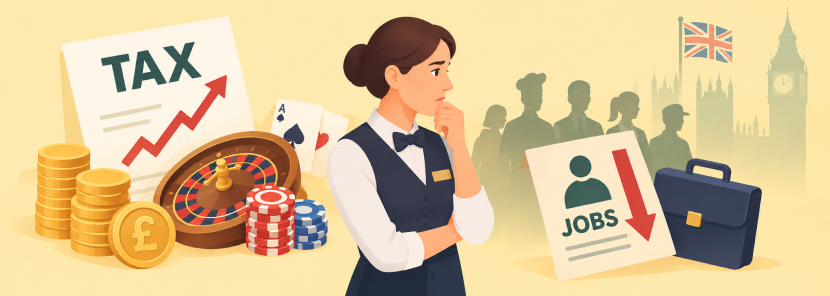

In the UK, the Betting and Gaming Council (BGC) cautions that increasing the Machine Games Duty (MGD) to 40% could jeopardise thousands of jobs across betting shops and casinos, while communities outside London are expected to suffer the greatest impact.
Before the upcoming Chancellor’s Budget, the industry advises the government to rule out an additional tax increase. To back its claim, it cited independent EY modelling that estimates the proposed MGD rise could put up to 16,000 jobs at risk across the gambling sector.
The modelling also suggests that approximately 1,500 betting shops and up to 34 casinos could face closure, which could potentially leave the Treasury £124 million worse off.
Betting Shops and Casinos Face Employment Risks
Currently, Britain’s betting shops support more than 36,000 jobs, with over 80% of employees working outside London. However, the Council says market towns, former industrial communities and seaside towns, particularly in northern England, could be among the areas most affected by potential closures.
Young workers account for a significant percentage of the betting shop employees across the UK. Almost one in five employees, or 19%, is under 25, compared with 11% across the wider economy. More than half of betting shop employees are under 35, against 35% nationally.
At the same time, women make up approximately half of the workforce, with the sector providing contracted employment and working arrangements that can accommodate childcare and other caring responsibilities.
BGC warns that land-based casinos could be subject to considerable risks if the machine game duty is increased. It’s reported that raising the duty to 40% could put up to 3,800 casino jobs at risk and force some operators to consider closing as much as a third of their estates.
Around half of the threatened casino closures would affect northern England and Scotland, putting approximately 1,900 jobs at risk. A further 20% would be in the Midlands, while London would account for just 10%.
Grainne Hurst, Chief Executive of the BGC, recently commented that the proposed tax increase posed a serious threat to employment and local communities.
“Britain’s betting shops support more than 36,000 jobs, and more than eight in ten of them are outside London,” Hurst said.
She added that many employees were young people taking their first steps into the labour market, while women represented half of the workforce.
Hurst also described the proposal as ‘an existential threat to casinos across Britain’, as she warned that thousands of workers could lose their livelihoods and established venues could close permanently.
Industry Warns of Severe Economic Implications
In its statement, the BGC argued that closures would have an impact beyond direct job losses, and potentially leave more vacant premises on high streets and reduce economic activity in communities that are already facing difficulties.
At the moment, the UK’s casinos employ directly more than 10,000 people and support over 3,700 jobs. They welcome roughly 14 million customer visits every year, and contribute £515 million in taxes and generate £815 million for the UK economy.
Industry representatives also warned that more than £50 million in planned casino investment could be cancelled or scaled back if taxes increase again.
Currently, betting shops contribute about £140 million annually to British horseracing, while BGC members provide more than £40 million a year to sports, including the English Football League and rugby league.
When looking into regulated casinos and betting across the UK, BGC estimates that businesses provide work for 109,000 individuals, contribute £6.8 billion to the economy and generate more than £4 billion annually in tax revenue.
The organisation said further tax increases could undermine these contributions by making some brick-and-mortar businesses financially unviable.
Seeking Changes to Gambling Tax Policy
The warning comes at a time when the sector faces additional tax pressure. Remote Gaming Duty for online casinos was increased to 40%, while a further rise in General Betting Duty is on the cards for April 2027.
BGC pointed to the Treasury’s position at last year’s Budget, when it recognised that land-based betting provides greater levels of employment than remote gambling.
Hurst argued that the government should consider the potential consequences of further increases, particularly as ministers seek to improve employment opportunities for young people and revitalise high streets.
The BGC urges the Chancellor to rule out an increase in Machine Games Duty, assess the impact of existing tax changes and halt the planned rise in General Betting Duty.
The government’s decision on gambling taxation could therefore have significant implications for betting shops and casinos, particularly in communities outside London where the industry says employment and investment would be most vulnerable.
However, the projected job losses, closures and revenue effects cited by the BGC are estimates based on industry modelling rather than confirmed outcomes. The extent of any impact would depend on the final tax measures and how operators respond.