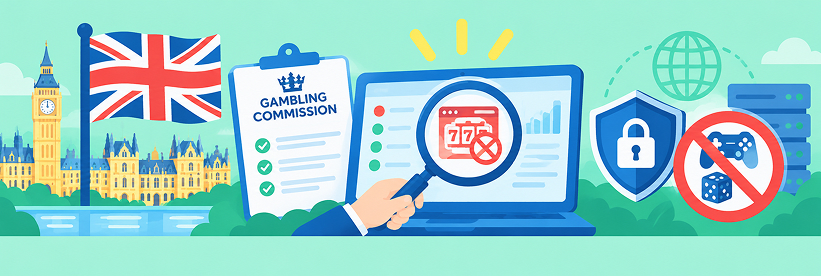

This week, the UK Gambling Commission presented a brand-new measurement system to monitor user engagement with illegal gambling websites. Initial findings suggest that 4% of online gamblers used unlicensed gambling platforms during the span of 12 months
The Illegal Gambling Index combines seven behavioural indicators to provide a more comprehensive picture of participation in the illegal gambling market.
The findings form part of the regulator’s fourth and final phase of its Consumer Voice research programme from November 5, 2026. The research uses data from the first year of the Gambling Survey for Great Britain, covering April 2025 to April 2026.
According to the regulator, the new index would establish a baseline for monitoring changes in consumer engagement and assessing the effectiveness of its efforts to disrupt illegal operators.
Identifying Different Forms of Illegal Gambling Engagement
UKGC’s Illegal Gambling Index was developed to address the difficulties of calculating activity in the unregulated market. The Commission notes that simply asking players whether they had used illegal gambling websites produced inconsistent results.
For instance, some consumers may not realise that a website is illegal, while others may struggle to identify unlicensed operators or accurately report their activity.
Instead of relying on a single question, the new system combines seven self-reported behavioural indicators. These include using casinos not on GamStop, accessing platforms without age or identity verification, and using VPNs or cryptocurrency to reach gambling services.
The methodology also takes into account how recently these behaviours were demonstrated. It allows the regulator to distinguish between engagement in the previous four weeks, activity in the past year, and behaviour further back.
The index was developed based on data collected throughout the first three research phases, including consumer surveys, interviews, focus groups and input from industry experts and advisory groups.
4% of Online Gamblers Play on Illegal Sites
Initial findings suggest that engagement with illegal gambling websites remains relatively low across the general population.
Among all respondents, including those who had not gambled, 0.6% reported having played on illegal websites in the last four weeks. Then another 0.4% admitted such activity within the previous 12 months, but not in the most recent four weeks.
The numbers were higher for people who had gambled online. Of them, 2.5% did so on unregulated websites during the four weeks before the survey, while another 1.5% reported engagement earlier in the 12-month period. It means that 4% of online gamblers had engaged with illegal gambling websites at some point during the previous year.
A further 4.6% of all respondents showed limited signs of engagement. However, the Commission said there was insufficient evidence to confidently classify these individuals as users of illegal gambling websites.
The research also identified demographic differences. Men were more likely than women to engage with unlicensed sites, while younger adults, aged 18 to 24, showed higher engagement over the previous 12 months.
It was also reported that in respondents aged 25 to 34, illegal gambling engagement was more evident during the previous four weeks.
The most frequently reported behavioural indicators among identified users were accessing websites known not to be registered with GamStop (58%) and cancelling withdrawals before the funds reached a bank account or wallet (56.6%).
Commission Amps Up Disruption Activity
Commenting on the recent findings, Sue Young, the UKGC’s executive director for operations, shared that the results painted a mixed picture.
She noted that engagement with the illegal market appeared relatively low and stable across the overall population. However, a particular group of online gamblers continued to use these platforms and was more likely to experience harm.
She added that illegal gambling posed risks to consumers and remained a priority for the regulator and its partners. The regulator’s November dashboard also highlighted an increase in enforcement and disruption activity.
In Q2 2026/27, the regulator took action against 311 illegal gambling websites, or 38% more than it did in the previous quarter. As a result, around 77% of affected websites experienced a reduction in traffic following intervention.
The regulator also reported an 18% reduction in total estimated traffic across disrupted websites for which sufficient data was available.
However, the Commission warned that these figures do not establish that disruption activity alone caused the observed traffic reductions. It also said it was too early to assess the overall impact of its enforcement work on consumer engagement.
Plans for Greater Illegal Gambling Monitoring
The Illegal Gambling Index will form part of the regulator’s longer-term monitoring strategy. The regulator plans to compare future GSGB results with other evidence, including website traffic estimates and intelligence from different sources.
It also intends to expand its Illegal Gambling Data Dashboard to cover more of the infrastructure supporting unlicensed operators.
This will include affiliates, social media platforms, advertisers, payment providers and hosting services, allowing the Commission to monitor activity beyond individual gambling websites.
The regulator will also introduce supplementary questions to the GSGB in 2027 to better understand four consumer groups previously identified through its research, including Self-Excluders, Skilled Advocates, Social Explorers and Accidental Tourists, each representing different motivations, behaviours and pathways into illegal gambling.
The additional questions are expected to help establish the relative size of each group and provide further insight into why consumers turn to unlicensed sites.
UKGC said the new Index would remain adaptable as the online gambling market evolves and further evidence becomes available. It expects future data to help distinguish temporary changes from longer-term trends and guide its efforts to protect consumers and disrupt illegal gambling operations.