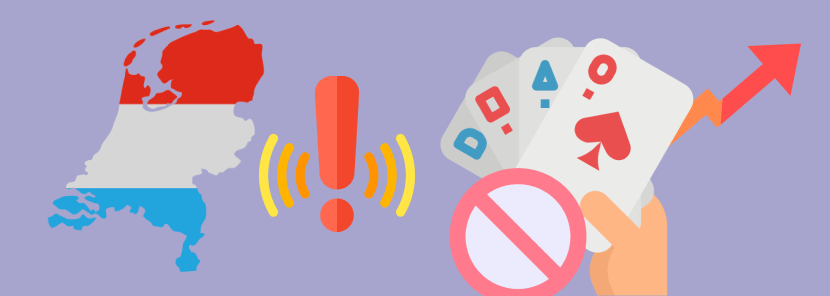

The Dutch Gambling Authority (KSA) warns that the Netherlands’ regulated online casino market is facing increasing pressure from restrictive policies, rising gambling addiction concerns, and the rapidly expanding illegal sector.
On Thursday, June 4, 2026, KSA’s Licences and Supervision Directorate, Ella Seijsener, gave a speech at an industry event. She spoke about how the Netherlands casino market has essentially stalled while foreign markets continue their expansion.
She cited a new market monitoring report that shows that the number of licensed operators, consumers, gross gambling revenue, and channelisation rate have remained relatively unchanged in the last six months.
For comparison, according to data from H2 Gambling Capital, the licensed iGaming market across the European Union expanded by 11% in 2025 from the previous year.
“The Dutch licensed online gambling market is seriously lagging behind,” Seijsener said during her speech.
Concerns Over Government Policy
Seijsener also acknowledged the growing concerns among operators about the future regulatory environment. The KSA has recently started a consultation process with the Dutch government's new secretary of state responsible for gambling policy and has expressed reservations about several proposed measures.
The regulator reiterated its opposition to a complete ban on advertising by online gambling providers and also shared its concerns about proposals to reduce the number of licensed operators in the Dutch internet gaming regime.
Seijsener also pointed to an upcoming assessment of the country's gambling tax increase, which is expected to be released later this month. In her words, it will likely show that the measure failed to achieve its intended objectives. She insisted that instead of generating additional revenue, the higher tax burden has contributed to a cooldown in the taxable market.
Illegal Market Growth is also a Worry
According to the KSA, the legal sector may be losing, but the same cannot be said about the illegal gambling market, which continues to grow.
Seijsener revealed that the channelisation rate based on gross gambling revenue has now dropped to 53%. In her opinion, this drop indicates that nearly half of gambling activity is taking place outside the regulated market.
She also discussed the heavy gambling advertising by unregulated operators on social media platforms, especially TikTok, Facebook, and Instagram, urging these tech companies to put more effort into tackling the promotion of illegal online casino products.
It was also revealed that KSA’s chairman, Michel Groothuizen, recently travelled to Dublin to meet with major technology firms alongside other European regulators to discuss coordinated efforts against illegal gambling operators.
The regulator remains focused on disrupting the infrastructure that enables illegal gambling businesses in cooperation with banks, payment providers, hosting companies, and marketing firms.
Industry Urged to Improve Player Protection
Seijsener acknowledged the difficulties for licensed casinos and noted that criticism of operators has increased over the past year, including scrutiny from lawmakers, consumer groups, and media organisations.
Still, her message was strong: the industry must bolster its player protection standards. The Dutch Consumers' Association has launched a significant legal claim concerning operators’ duty of care obligations, which further supports broader concerns about how gambling companies protect vulnerable players.
“The fact that such a claim has enough breeding ground and is being widely taken up does say something about how we as a society view gambling.”
The regulator also criticised attempts by some operators to exploit loopholes in advertising rules, which is related to the growing popularity of casino-related content produced by online streamers.
Gambling Addiction Cases Continue to Rise
Additionally, Seijsener also warned that the number of people looking for gambling addiction treatment is still on the rise. A trend, she said, was partly expected because gambling-related harms often take years to become visible.
However, she stressed that the rise remains a serious concern, particularly among young adults. The upcoming FIFA World Cup presents additional risks due to its strong appeal to younger audiences and its potential to attract new players.
The KSA has already issued guidance to operators outlining its expectations during the tournament and has pledged strict enforcement of advertising rules.
The regulator also expressed concern that some young adults continue to experience significant gambling losses or engage in prolonged gambling sessions without intervention from operators.
“We still hand out warnings and fines for failure to comply or fully comply with the duty of care,” Seijsener said.
KSA Restructures to Focus on Risk and Prevention
The speech also highlighted internal changes within the KSA. The regulator has reorganised its management structure and established a dedicated player protection department focused on consumer education and the use of the Addiction Prevention Fund.
According to Seijsener, the authority is moving toward a more risk-based and problem-solving approach to supervision, concentrating resources on areas where consumers face the greatest risks.
Finally, she talked about how the long-term legitimacy of the regulated gambling market depends on operators demonstrating that consumers are safer within it than in the illegal market.
“As a regulator, we will remain committed to a safe, regulated market,” said. “But the most important part is that we can say without reservation that people are better off in that regulated market,” Seijsener concluded.